

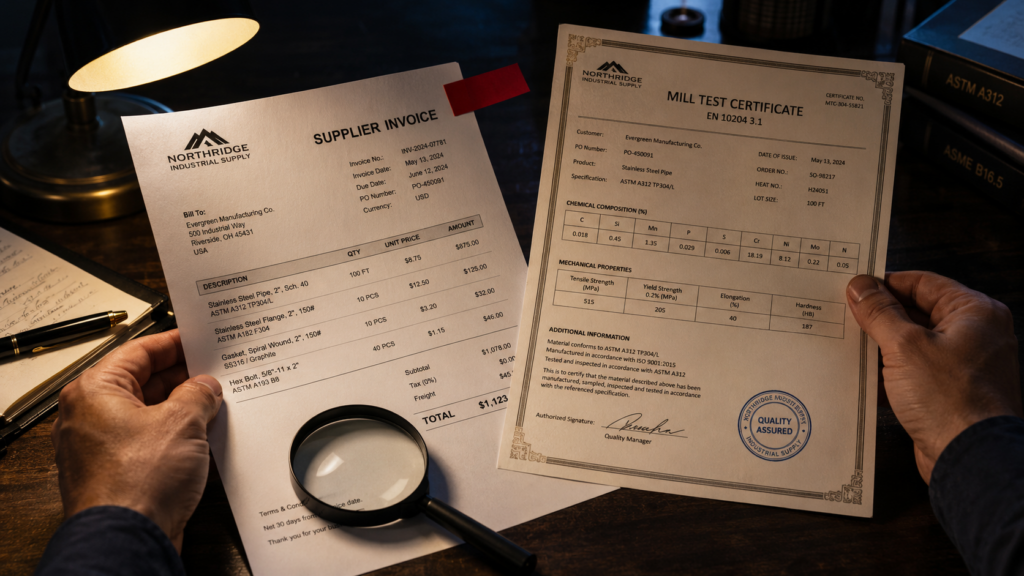
Nearly every supplier fraud we investigate has the same skeleton. The storefront looks professional. The price is slightly — not absurdly — better than everyone else’s. Communication is fast and friendly right up until the deposit clears. Then the tracking number never comes, or a container of bricks does.
The defence is not cleverness or instinct. It is procedure, applied every single time, even when the supplier “feels” trustworthy. Especially then.
The six red flags that catch almost everything
1. The bank account doesn’t match the company
This is the single most reliable tell. If the invoice says “Shenzhen Meiling Electronics Co., Ltd.” but the payment instructions point to a personal account, a different company name, or a bank in a third country — stop. Legitimate manufacturers get paid into corporate accounts matching their registered name. No exceptions worth your money.
2. The “manufacturer” is actually a trader
Trading companies are not scams, but paying factory-direct prices to a middleman means someone is lying about the margin. Ask for the factory address, then check it: a real manufacturer can produce a business licence whose registered scope includes production, photos of your product actually being made, and a video call from the floor within a day.
3. Certificates that don’t survive a phone call
CE, ISO and FDA certificates are the most-forged documents in the trade. Every genuine certificate carries an issuing body and a certificate number — and issuing bodies have verification portals or phone lines. Two minutes of checking kills most fakes. Expired certificates “being renewed” count as absent.
4. No verifiable export history
A factory that has genuinely shipped to Africa can name ports, shipping lines and clearance requirements without hesitation. Ask what documentation they provided for their last Lagos shipment. Vagueness here predicts chaos later even when it isn’t fraud.
5. Pricing meaningfully below every credible competitor
Quote the same specification to five factories and the honest prices cluster. An outlier 30% below the cluster is not a bargain — it is a different product, a different quality, or a fishing hook. The market knows what things cost to make.
6. Resistance to inspection
The cleanest test of all. “You are welcome to inspect before shipment” costs a legitimate factory nothing. Excuses — factory rules, holidays, “our own QC is very strict” — are a no, and a no here is your answer to everything.
The checklist before any deposit moves
- Business registration verified against the official registry, not the supplier’s PDF.
- Invoice name, registered name and bank account name all match exactly.
- At least one certificate verified with its issuing body.
- Factory confirmed by video call or third-party visit.
- Pre-shipment inspection agreed in writing before the order is placed.
If a supplier passes all five, your risk drops from “gambling” to “business as usual.” If checking feels like too much work for a small order, remember that the scam does not scale down — a lost $3,000 deposit hurts a small business more than a lost $30,000 hurts a large one.
This is exactly the verification we run as a standalone service — registry checks, licence validation, factory confirmation, risk scoring and a written go/no-go report — before any client money moves. If you already have a supplier you’re unsure about, have them checked before you pay, not after.